Trolling Motors
Which shallow water anchor should you buy?
Quick answer
The Minn Kota Talon 12 covers most inland fishing depths at 12 feet of reach with electric screw drive deployment. A kayak or skiff does better on the smaller, lighter Power-Pole Micro, and a manual pull-rope anchor removes the electrics entirely.
A shallow water anchor is a pole that spikes the boat to the bottom at the push of a button, holding position far more quietly than dropping a traditional anchor and far more precisely in current than idling on the outboard. GPS Spot-Lock on a trolling motor does something similar, but it is not a replacement: Spot-Lock uses the motor to actively counter wind and current, drawing battery the entire time it holds, while a shallow water anchor is a rigid mechanical spike that holds position using no power at all once it is down.
The choice mostly comes down to how deep the water is where you actually anchor, and whether you want an electric, hydraulic or fully manual mechanism doing the work. Pole length is a published manufacturer specification and is the number worth checking first, before brand.
We compared published pole lengths, actuation types and control options against each listing and read verified owner reviews for deployment speed and noise, rather than deploying every anchor here off our own boat.
On this page
- What does a shallow water anchor do that Spot-Lock cannot?
- How long a pole do you actually need?
- Manual, hydraulic or electric screw drive?
- Beginner: light, simple and inexpensive
- Intermediate: the mainstream electric anchor
- Expert: fastest deployment and the deepest reach
- How we chose these anchors
What does a shallow water anchor do that Spot-Lock cannot?
Spot-Lock holds a boat in place by continuously running the trolling motor to counter wind, current and boat wakes, which means it draws battery power the entire time it is engaged and it stops working the moment the battery or the motor does. A shallow water anchor drops a rigid pole to the bottom and holds position mechanically once deployed, drawing power only during the deployment itself, and it keeps holding even with the trolling motor switched off entirely. See Spot-Lock versus a shallow water anchor for when each one is the better tool.
How long a pole do you actually need?
Pole length is a published manufacturer specification, and it sets the practical water depth the anchor can reach rather than being a rough guideline. Buying a pole shorter than your typical anchoring depth simply will not reach bottom, while a pole much longer than you need adds unnecessary weight and cost to the transom.
An 8 foot pole covers most skiffs and bay boats, while a 12 to 15 foot pole reaches the deeper end of most inland lakes.
Published figure A published engineering, regulatory or manufacturer figure. It does not change because somebody disagrees with it.
| Pole length | Actuation available | Typical use |
|---|---|---|
| 8 ft | Hydraulic or manual | Skiffs, bay boats and shallow flats |
| 10 ft | Electric screw drive | Standard bass boat depths |
| 12 ft | Electric screw drive | Deeper inland lakes |
| 15 ft | Electric screw drive | The deepest water most anglers anchor a boat in |
Pole length is the manufacturer own published specification. Match it to the deepest water you regularly anchor in, not your average depth.
Manual, hydraulic or electric screw drive?
A manual pull-rope anchor removes the electrics entirely, deploying and retrieving on a spring loaded rope rather than a pump or a motor, which means nothing to wire in and nothing to fail beyond the gas spring itself. A hydraulic anchor uses a small pump to drive the pole down and up, deploying and stowing considerably faster than a screw drive unit and running quieter into the water. An electric screw drive anchor is the mainstream choice, using a threaded rod driven by a small motor, and it is what most anglers mean by the Talon.
Beginner: light, simple and inexpensive
A first shallow water anchor should be light enough for a kayak or a skiff, or should skip the electrics entirely with a manual mechanism.
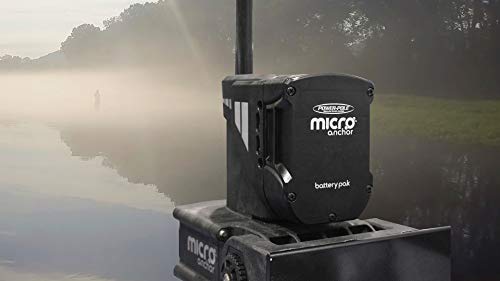
Power-Pole Micro Anchor
$649.99The smallest and cheapest genuine shallow water anchor, light enough for a kayak or skiff and the entry point to the category.
Best for: Kayaks, skiffs and small bay boats in under about eight feet
Check price on Amazon
Lewmar Vector 8 ft manual shallow water anchor
$559.95A pull-rope mechanism rather than a pump, removing the electrics entirely and costing a third of the powered options.
Best for: Anyone who wants the function without adding another electrical load to the boat
Check price on AmazonIntermediate: the mainstream electric anchor
The Talon line is the anchor most bass boats run, with multiple control options and enough reach for the majority of inland fishing depths.
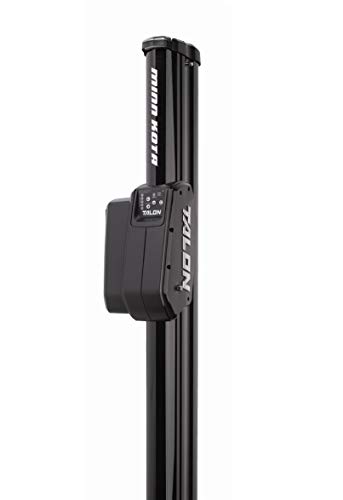
Minn Kota Talon shallow water anchor, 10 ft
$1,843.99Ten feet of reach and a Minn Kota that talks to the rest of the Minn Kota system, including auto deploy from Spot-Lock.
Check price on Amazon
Minn Kota Talon shallow water anchor, 12 ft
$1,986.97Twelve feet, the size that covers most inland fishing depths rather than only the shallow end of them.
Check price on AmazonExpert: fastest deployment and the deepest reach
Hydraulic deployment and the longest published pole lengths exist for boats that anchor constantly and in deeper water than the mainstream Talon covers.

Power-Pole Pro Series II shallow water anchor, 4 ft
$1,649.99The hydraulic Power-Pole the flats boat world runs on, considerably quieter into the water than a spike driven by a screw.
Check price on Amazon
Minn Kota Raptor shallow water anchor with Active Anchoring, 8 ft
$1,805.90The hydraulic Minn Kota, dropping far faster than a Talon and the direct Power-Pole competitor.
Check price on Amazon
Minn Kota Talon shallow water anchor, 15 ft
$2,614.26The longest Talon, for water where twelve feet runs out and the boat has the transom height to carry it.
Check price on AmazonWho should not buy this tier: A kayak, a skiff, or any small boat that anchors mainly in a few feet of water. The hydraulic Power-Pole Pro Series II and the 15 foot Talon are both built for boats anchoring regularly in deeper water, and both cost considerably more than the reach a small boat actually needs.
How we chose these anchors
We compared published pole lengths, actuation types and control options against each listing, and read verified owner reviews for deployment speed, noise and long term reliability of the spike mechanism. This is specification comparison based on published manufacturer data and verified owner reviews, not a season of deploying every anchor here off our own transom.
How we chose
We did not test this equipment in person and we never claim to. Picks are researched from manufacturer specification sheets, published engineering and regulatory figures, and the recurring themes in verified owner reviews. Every pick is matched to a real thrust rating, a real published amp draw, a real capacity or a real conductor size rather than to a price bracket, and it is placed in the tier where its published capability actually belongs. We rejected the unbranded flood that dominates several of these search results, because a lithium pack whose management board is the only thing between a cell fault and a fire, a breaker protecting a battery cable, a life jacket and a bracket holding a two thousand dollar motor to the bow at highway speed are all parts whose failure has a consequence nobody can walk away from. Where a figure is convention rather than a published standard we label it that way, and where a manufacturer does not publish a figure we leave it out instead of estimating it.
Frequently asked questions
Do I need a shallow water anchor if my trolling motor already has Spot-Lock?
It depends on how you fish and how long you hold a spot. Spot-Lock draws battery continuously while it holds position, which adds up over a full day of repeated stops, and it stops working the moment the battery runs low or the motor is raised. A shallow water anchor holds mechanically with no ongoing power draw once deployed, which makes the two complementary tools rather than one replacing the other for most anglers who use both regularly.
How deep can a shallow water anchor actually work in?
Roughly the pole's own published length, since the anchor has to physically reach the bottom to hold. An 8 foot pole works in water up to about that depth, while a 15 foot Talon reaches considerably deeper. Buying more length than you regularly fish in mainly adds weight and cost to the transom, so match the pole to the deepest water you routinely anchor in rather than the longest one available.
Is a hydraulic anchor worth the extra cost over an electric screw drive one?
For anglers who anchor and pick up constantly through a day, yes, since hydraulic deployment is noticeably faster and quieter entering the water than a screw drive mechanism working its way down a threaded rod. For someone who drops anchor a handful of times per trip and leaves it down, the speed difference matters far less, and a Talon's lower price and wide compatibility with the rest of a Minn Kota electronics system often outweighs the faster hydraulic deployment.
Can a manual anchor really hold as well as a powered one?
Yes, for the boats it is built for. A manual pull-rope anchor like the Lewmar Vector uses the same fiberglass spike and gas spring mechanism as many powered anchors, just deployed by hand instead of a motor or pump. It is a genuinely capable anchor for a skiff or small boat, and the tradeoff is convenience rather than holding power: deploying and retrieving it takes a bit more physical effort than pressing a button.
Do shallow water anchors need their own circuit protection?
Electric and hydraulic shallow water anchors draw real current briefly during deployment and retrieval, so yes, they need overcurrent protection sized to the manufacturer's specification just like any other electrical device on the boat, placed within 7 inches of the battery positive terminal under ABYC E-11. A manual pull-rope anchor has no electrical connection at all and needs none, which is one of its genuine advantages over the powered options.
Should a kayak angler buy a shallow water anchor or a traditional anchor?
A compact shallow water anchor like the Power-Pole Micro works well on a kayak in shallow, calm water and deploys with no rope to manage, which matters in a small cockpit. A traditional anchor on a rope with proper scope remains the better choice in deeper water or current, since a shallow water anchor's reach is limited by its pole length in a way a rope and anchor is not. Many kayak anglers carry both for different conditions.
Get the complete rigging shopping list
Every item in the beginner, intermediate and expert rigs for both a boat and a kayak, with running totals, in one printable list. No charge.
One list, no sequence of daily emails, and you can leave at any time.
Researched, not professional advice. This page is compiled from published engineering and regulatory figures, manufacturer specifications and owner-review consensus, not hands-on testing. Figures described as a rule of thumb are boating convention rather than published standards, and they are labelled that way wherever they appear. Marine electrical work is not house wiring. Use tinned, finely stranded marine cable, size it for voltage drop and for the ABYC E-11 ampacity table rather than one or the other, and put overcurrent protection within seven inches of the battery positive terminal, because everything between the post and the fuse is unprotected. A lithium battery needs a charger with a lithium profile. Never load a boat past its capacity plate, and remember that canoes and kayaks carry no federal capacity plate at all, so their stated capacity is the manufacturer own figure. Wear the life jacket, and treat early season water as the hazard it is: cold water immersion takes your breath and then your hands long before it takes your core.