Sonar
The best fish finders for kayak fishing
Quick answer
The Lowrance Eagle 4X is the best fish finder for most kayaks, at a compact 4 inch screen and a low price with a transducer built for a 44 degree wide beam suited to shallow, narrow water. Kayak anglers who want imaging sonar should step up to the Humminbird Helix 5 CHIRP DI, while a scupper or track mount keeps the transducer secure without gluing anything to the hull.
A kayak is not a small boat with less deck space. It is a hull with genuinely limited weight capacity, a single small battery that usually comes off the boat after every trip to charge, and no permanent wiring runs the way a boat has. The picks on this page were chosen for that specific set of constraints rather than for the largest screen a kayak console could theoretically hold.
Kayak weight capacity figures published by manufacturers are the manufacturer own stated numbers. Federal capacity plate rules cover monohull boats under twenty feet propelled by machinery, and kayaks and canoes are not covered by that rule, so a kayak rating has no independent standard behind it the way a powerboat plate does. Every reference to kayak capacity on this page treats it as a manufacturer figure, not a certified rating.
On this page
- How we chose these fish finders
- What actually matters on a kayak that does not matter on a boat
- Beginner: the lightest, simplest setup
- Intermediate: imaging without the weight penalty
- Expert: more setup than most kayaks need
- Mounts built for a kayak, not adapted from a boat
- Kayak fish finders compared by size and power
- Does a kayak fish finder need its own dedicated battery
How we chose these fish finders
Screen size, weight, published power requirements and mounting compatibility were compared from manufacturer listings, then checked against verified reviews from kayak anglers specifically, since a review written from a bass boat console rarely mentions battery weight or scupper fit. We did not test these units from our own kayak. Mounts were chosen for genuine kayak compatible hardware such as scupper mounts and track systems, not adapted boat hardware.
What actually matters on a kayak that does not matter on a boat
Weight is the first constraint, on the unit itself and on the battery that powers it, since both typically come off the kayak and get carried to the vehicle after every trip. Mounting is the second, since a kayak has no transom to bolt into the way a boat does, which is why scupper mounts and track systems exist as their own hardware category. Screen size matters least here, since most kayak anglers sit close enough to the unit that a four or five inch screen reads just as well as a seven inch one would on a boat further away.
Beginner: the lightest, simplest setup
The goal is the lightest total setup, unit and battery combined, that still gives a working depth and sonar reading from a kayak seat.

Lowrance Eagle 4X
$116.91A compact 4 inch screen with a wide 44 degree beam Bullet Skimmer transducer, built specifically for kayaks and small boats.
Best for: A first kayak fish finder where weight and price both matter
Check price on Amazon
Garmin Striker 4
$139.99 Published specsReal CHIRP sonar and GPS in a compact 3.5 inch package, with a published current draw of only 0.23 amps at 12 volts.
Best for: A kayak angler who wants GPS waypoints on the smallest realistic battery
Check price on AmazonIntermediate: imaging without the weight penalty
Down Imaging fits a compact five inch screen without needing the larger battery a seven inch Side Imaging unit demands, which is the practical ceiling for most kayak setups.

Humminbird Helix 5 CHIRP DI GPS G3
$370.74CHIRP Down Imaging on a compact five inch head, giving a picture-like view of structure without stepping up to a heavier seven inch unit.
Best for: A kayak angler fishing docks and brush who wants imaging without the weight jump
Check price on Amazon
Lowrance HOOK Reveal 5 SplitShot
$299.95 Published specsPreloaded C-MAP US Inland charts on a five inch screen, useful for a kayak covering unfamiliar water under paddle or pedal power.
Best for: Exploring new lakes from a kayak where the chart matters as much as the sonar
Check price on AmazonExpert: more setup than most kayaks need
This tier exists for the rare kayak angler running a larger pedal drive kayak with real battery capacity and deck space, not as a default recommendation.

Humminbird Helix 7 CHIRP MEGA SI GPS G4N
$999.99 Published specsMEGA Side Imaging on a seven inch screen, for a larger pedal kayak with the battery capacity and deck space to run it properly.
Best for: A large pedal drive kayak with a dedicated battery box and real console space
Check price on AmazonWho should not buy this tier: A kayak with limited hull storage or a single small 12 volt battery, since a seven inch screen and MEGA imaging draw more power and take up more deck space than most kayak setups budget for.
Mounts built for a kayak, not adapted from a boat

Lowrance kayak scupper mount for Skimmer transducers
$53.74Drops a Skimmer transducer through an existing scupper hole, so a sit on top kayak gets sonar with nothing drilled and nothing glued.
Best for: Sit on top kayaks with a scupper in a sensible place
Check price on Amazon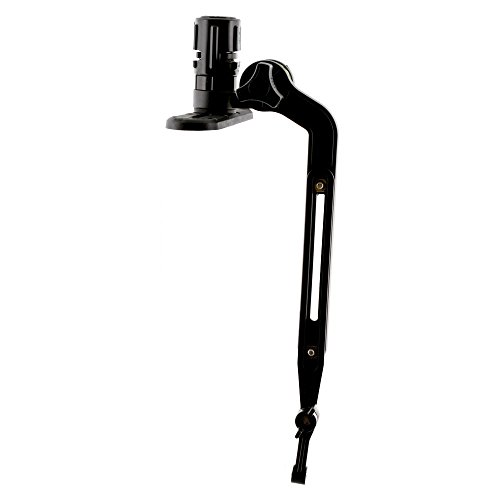
Scotty 0141 kayak and SUP transducer mounting arm
$31.03Swings the transducer over the side and lifts it clear for launching and landing, the failure point of every fixed kayak mount.
Check price on Amazon
RAM Mounts fish finder track mount
$71.99Mounts a screen on kayak track, so the whole unit comes off in one movement at the end of the day.
Best for: Kayaks, and any boat that is left on a trailer outdoors
Check price on AmazonKayak fish finders compared by size and power
Every figure below is the manufacturer own published specification. Current draw is listed only where the manufacturer states an exact number.
The Garmin Striker 4 publishes the lowest current draw in this catalog at 0.23 amps at 12 volts, which matters most on a kayak running a single small battery.
Published figure A published engineering, regulatory or manufacturer figure. It does not change because somebody disagrees with it.
| Model | Screen | Sonar | Current draw | Price |
|---|---|---|---|---|
| Lowrance Eagle 4X | 4 in | Basic sonar | Not published | $116.91 |
| Garmin Striker 4 | 3.5 in | CHIRP traditional | 0.23 A at 12V | $139.99 |
| Humminbird Helix 5 G3 DI | 5 in | CHIRP and Down Imaging | Not published | $370.74 |
| Lowrance HOOK Reveal 5 | 5 in | CHIRP and DownScan | Not published | $299.95 |
Rows marked not published are omitted rather than estimated, since an unpublished current draw is not a safe number to guess against a single small kayak battery.
Does a kayak fish finder need its own dedicated battery
Most kayak anglers run a small dedicated 12 volt battery just for the fish finder rather than sharing power with anything else, since a kayak rarely carries a second electrical load like a trolling motor bilge pump. Checking the unit published current draw against the battery published capacity with a battery runtime calculator before buying avoids the common mistake of pairing a full day trip with a battery sized for a half day.
How we chose
We did not test this equipment in person and we never claim to. Picks are researched from manufacturer specification sheets, published engineering and regulatory figures, and the recurring themes in verified owner reviews. Every pick is matched to a real thrust rating, a real published amp draw, a real capacity or a real conductor size rather than to a price bracket, and it is placed in the tier where its published capability actually belongs. We rejected the unbranded flood that dominates several of these search results, because a lithium pack whose management board is the only thing between a cell fault and a fire, a breaker protecting a battery cable, a life jacket and a bracket holding a two thousand dollar motor to the bow at highway speed are all parts whose failure has a consequence nobody can walk away from. Where a figure is convention rather than a published standard we label it that way, and where a manufacturer does not publish a figure we leave it out instead of estimating it.
Sources
- Garmin, Humminbird and Lowrance published product specifications for each model listed
Frequently asked questions
What is the best fish finder for a kayak
The Lowrance Eagle 4X is the best fish finder for most kayaks. Its compact 4 inch screen and wide 44 degree beam Bullet Skimmer transducer were built specifically for kayaks and small boats, it carries the lowest price in this catalog, and its light weight and simple power needs suit a kayak battery setup that usually comes off the boat and gets carried home after every trip.
Does a kayak fish finder need GPS
It depends on how the water is fished. GPS lets a kayak angler mark a productive spot and return to it, or build a simple map of a new lake over repeated trips, which is genuinely useful when paddling or pedaling rather than running a boat with a chartplotter. A kayak angler fishing the same familiar water can skip GPS and save weight, power and price with a unit like the Lowrance Eagle 4X.
How do I mount a fish finder on a kayak without drilling
A scupper mount drops a Skimmer style transducer through an existing scupper hole on a sit on top kayak with no adhesive and no drilling. A track mount clips the display itself onto factory installed kayak track. Between the two, most sit on top fishing kayaks can carry a complete fish finder setup without a single new hole in the hull, which matters for resale value and for keeping the kayak dry.
What size battery does a kayak fish finder need
It depends entirely on the unit published current draw and the length of a typical trip. The Garmin Striker 4, for example, publishes 0.23 amps at 12 volts, which a small dedicated battery handles for a full day with margin to spare. Larger imaging units draw more, and checking the manufacturer figure against battery capacity before a trip avoids running out of power on the water.
Is Down Imaging worth the extra weight on a kayak
For anglers fishing docks, brush and other vertical structure, yes. Down Imaging shows a picture-like view directly beneath the kayak rather than a line graph, which helps identify what a fish is actually holding near. The weight and power penalty over a basic CHIRP unit is modest on the compact units built for kayaks, such as the Humminbird Helix 5 CHIRP DI, so the tradeoff is usually worth it for anyone fishing structure regularly.
Does a kayak have a Coast Guard capacity plate like a boat
No. Federal capacity plate rules cover monohull boats under twenty feet propelled by machinery, and kayaks and canoes are specifically not covered by that rule. A kayak weight capacity figure is the manufacturer own stated number, useful as a guide but without the independent standard behind a powerboat plate. Treat any published kayak capacity as a manufacturer figure, not a certified rating.
Get the complete rigging shopping list
Every item in the beginner, intermediate and expert rigs for both a boat and a kayak, with running totals, in one printable list. No charge.
One list, no sequence of daily emails, and you can leave at any time.
Researched, not professional advice. This page is compiled from published engineering and regulatory figures, manufacturer specifications and owner-review consensus, not hands-on testing. Figures described as a rule of thumb are boating convention rather than published standards, and they are labelled that way wherever they appear. Marine electrical work is not house wiring. Use tinned, finely stranded marine cable, size it for voltage drop and for the ABYC E-11 ampacity table rather than one or the other, and put overcurrent protection within seven inches of the battery positive terminal, because everything between the post and the fuse is unprotected. A lithium battery needs a charger with a lithium profile. Never load a boat past its capacity plate, and remember that canoes and kayaks carry no federal capacity plate at all, so their stated capacity is the manufacturer own figure. Wear the life jacket, and treat early season water as the hazard it is: cold water immersion takes your breath and then your hands long before it takes your core.