Safety
What should you check before every fishing trip?
Quick answer
Most pre-trip checklists miss the two mistakes that actually strand people: testing battery voltage at rest instead of under load, and doing a radio check on channel 16, which is reserved for hailing and distress and must not be used for routine checks.
Most pre-trip checklists get copied from one site to the next without anyone checking whether the items on it actually catch the failures that leave someone stranded or in the water. Two habits do more real work than the rest of the list combined: testing the battery under an actual load instead of at rest, and never doing a radio check on channel 16.
The rest of the list below is not exotic either. It is the bilge pump and its float switch actually cycling, the drain plug seated, the breaker in, a PFD aboard for every seat, and dressing for the temperature of the water rather than the air. None of it takes long, and all of it is the kind of thing that only matters on the one day it goes wrong.
On this page
How do you actually check battery voltage before a trip?
A battery reading 12.6 volts at rest can still collapse the moment a real load hits it. Resting voltage tells you roughly how charged a battery is; it does not tell you whether the battery can still deliver 50 amps to a trolling motor without its voltage falling apart.
A 12 volt lead acid battery reading 12.6 volts at rest is roughly full, but resting voltage alone never confirms it will hold up under an actual load.
Rule of thumb Boating and fishing convention rather than a published standard. Taught everywhere, useful, and not a specification. Nothing enforces it and no body publishes it.
| Resting voltage | Approximate state of charge |
|---|---|
| 12.6+ V | 100% |
| 12.4 V | 75% |
| 12.2 V | 50% |
| 12.0 V | 25% |
| 11.8 V | Effectively discharged |
This chart is a widely repeated convention for lead acid, not a published standard, and it does not apply to LiFePO4, which holds a flat voltage across most of its usable range. The real test either way is watching voltage under load with a clamp meter, not reading it at rest.
What do you actually check the load with?

AstroAI true RMS 6000 count auto-ranging multimeter
$34.99Enough meter to read battery voltage, continuity and a rough voltage drop, at a price that makes keeping one aboard easy.
Best for: A basic pre-trip electrical check
Check price on Amazon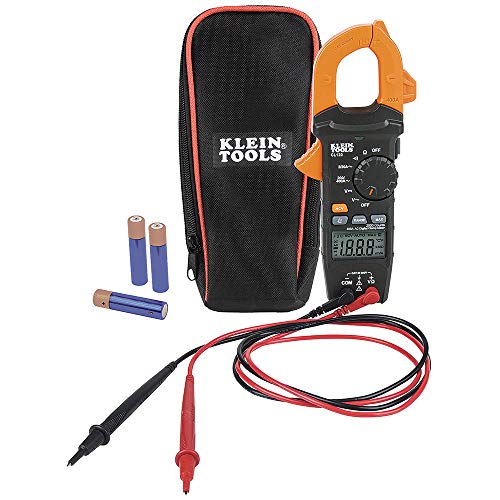
Klein Tools CL120 digital clamp meter, 400A AC
$64.98A clamp meter reads current without breaking the circuit, which is the only practical way to see what the motor is actually drawing.
Check before buying: Check the DC current range before buying if measuring trolling motor draw is the reason you are buying it. Many clamp meters read AC current only.
Best for: Confirming a motor draw under real load
Check price on AmazonWhat to check before every trip
- Test battery voltage under load. Run the motor at a working speed for a minute and watch the voltage rather than reading it at rest. A battery that sags hard is telling you more than a resting reading ever will.
- Cycle the bilge pump and its float switch. Confirm the pump runs on the manual switch, then lift the float switch by hand to confirm the automatic circuit also cycles the pump. A pump that only works manually is a pump that will not save the boat while nobody is watching.
- Confirm the drain plug is in. Said every season by someone standing at the ramp watching the boat fill. Check it before the boat goes in the water, not after.
- Confirm the breaker is seated and the panel is dry. A tripped or partially seated breaker looks fine until the first real load hits the circuit it protects.
- Count a PFD for every seat aboard. Confirm one is aboard, the right size, for every person who might be on the boat that day, not just the number required by the boat's rating.
- Check the CO2 cylinder and bobbin on any inflatable PFD. An inflatable life jacket depends on a full CO2 cylinder and a water sensitive bobbin that has not expired. Both have a date on them, and both need checking every season, not just once at purchase.
- Do a radio check on a working channel, never channel 16. Channel 16 is reserved for hailing and distress. Use a working channel or an automated radio check service where one exists, never channel 16 for a routine test.
- Leave a float plan with someone ashore. Tell somebody where you are going and when you expect to be back, in writing or by message, before you leave the ramp.
- Dress for the water temperature, not the air temperature. Cold water immersion takes your breath first and your hands second, long before it reaches your core. Dress for the water you could end up in, not the day it looks like on the dock.
Why can't you do a radio check on channel 16?
Channel 16 is the international hailing and distress channel, monitored by every vessel and by the Coast Guard. Keying up to ask "radio check, radio check" on 16 clutters the one channel reserved for someone else's actual emergency, and it is a commonly broken rule precisely because it feels like the obvious channel to test on.
Use a working channel instead, or an automated radio check service where one is available in your area. If you need a human response, arrange it on a working channel with someone you know is listening, not by broadcasting on the distress channel.
What is actually worth carrying for PFDs and a radio?

Onyx A/M-24 inflatable life jacket, automatic and manual, USCG approved
$107.99The most common approved auto-inflating vest on the water, which means rearm kits and CO2 cylinders are easy to find when the date runs out.
Check before buying: Automatic inflation is not appropriate for kayaking where you expect to be in the water. Check the cylinder and the bobbin date every season.
Best for: A vest worn all day on a powerboat
Check price on Amazon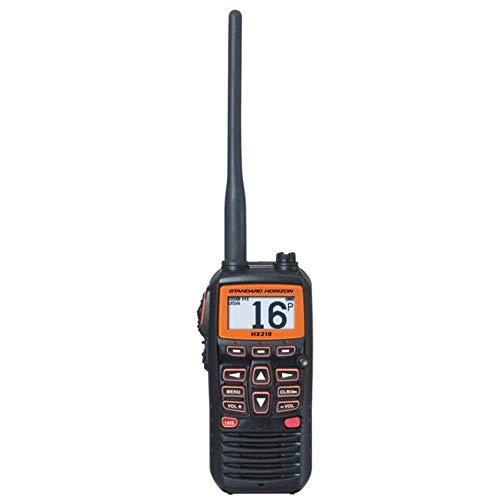
Standard Horizon HX210 6W floating handheld VHF
$114.25Floats and puts out the full legal six watts of handheld power rather than the three watts cheaper units are limited to.
Best for: A kayak or small boat with no fixed radio aboard
Check price on AmazonWhat else belongs on a pre-trip walk around?
Fuel and oil levels, the kill switch lanyard, the hitch and safety chains if the boat is still on the trailer, and a quick look at the prop for fishing line wrapped around the hub round out the walk around. None of these are electrical or dramatic, and all of them are exactly the kind of thing that gets skipped on a day when everyone is in a hurry to get on the water.
How we chose
We did not test this equipment in person and we never claim to. Picks are researched from manufacturer specification sheets, published engineering and regulatory figures, and the recurring themes in verified owner reviews. Every pick is matched to a real thrust rating, a real published amp draw, a real capacity or a real conductor size rather than to a price bracket, and it is placed in the tier where its published capability actually belongs. We rejected the unbranded flood that dominates several of these search results, because a lithium pack whose management board is the only thing between a cell fault and a fire, a breaker protecting a battery cable, a life jacket and a bracket holding a two thousand dollar motor to the bow at highway speed are all parts whose failure has a consequence nobody can walk away from. Where a figure is convention rather than a published standard we label it that way, and where a manufacturer does not publish a figure we leave it out instead of estimating it.
Frequently asked questions
Why does resting battery voltage not tell me if the battery is good?
A battery reading 12.6 volts at rest can still collapse the moment a real load hits it, because resting voltage measures roughly how charged the battery is, not how it behaves under current. The honest test is running the motor at a working speed and watching whether the voltage holds or sags hard, ideally with a clamp meter on the feed cable.
Why is it against the rules to do a radio check on channel 16?
Channel 16 is the international hailing and distress channel, monitored constantly by other vessels and by the Coast Guard. Using it for a routine radio check clutters the one channel reserved for an actual emergency. Use a working channel instead, or an automated radio check service where one is available in your area.
How often should I check the CO2 cylinder on an inflatable PFD?
Every season at minimum, and ideally before any trip where you have not worn the vest recently. Check that the CO2 cylinder is full and not corroded, and that the water sensitive bobbin has not passed its printed expiration date. Both are consumable parts that fail quietly until the vest is actually needed.
Does a float switch test matter if the manual bilge switch works?
Yes. A manual switch only helps if someone is aboard, awake and at the helm to flip it. The float switch is what triggers the pump automatically if water rises while nobody is watching, and it is a separate circuit from the manual switch that needs its own check, not an assumption that one working proves the other does too.
Why does water temperature matter more than air temperature for safety?
Cold water immersion causes an involuntary gasp response that takes the breath first, then reduces hand function within minutes, long before it affects the body's core temperature. A warm, sunny day with cold water underneath is a more dangerous combination than a cool day on warm water, which is why the checklist item is dressing for the water rather than the forecast.
What is the single most skipped item on a pre-trip check?
The float switch test is one of the most commonly skipped items, because the manual bilge switch working feels like proof the pump is fine. It only confirms half the system. The other common miss is testing battery voltage at rest and assuming that is sufficient, when the actual failure mode shows up only under load.
Get the complete rigging shopping list
Every item in the beginner, intermediate and expert rigs for both a boat and a kayak, with running totals, in one printable list. No charge.
One list, no sequence of daily emails, and you can leave at any time.
Researched, not professional advice. This page is compiled from published engineering and regulatory figures, manufacturer specifications and owner-review consensus, not hands-on testing. Figures described as a rule of thumb are boating convention rather than published standards, and they are labelled that way wherever they appear. Marine electrical work is not house wiring. Use tinned, finely stranded marine cable, size it for voltage drop and for the ABYC E-11 ampacity table rather than one or the other, and put overcurrent protection within seven inches of the battery positive terminal, because everything between the post and the fuse is unprotected. A lithium battery needs a charger with a lithium profile. Never load a boat past its capacity plate, and remember that canoes and kayaks carry no federal capacity plate at all, so their stated capacity is the manufacturer own figure. Wear the life jacket, and treat early season water as the hazard it is: cold water immersion takes your breath and then your hands long before it takes your core.