Gift Guides
Gifts for a kayak angler who already owns the boat
Quick answer
An anchor trolley under forty five dollars is the upgrade almost every kayak angler delays buying for themselves, because it changes how the kayak sits in wind or current from the very first trip. Beyond that, gifts should respect the two things a kayak actually limits: total weight and deck space, not raw thrust or amp hours.
A kayak angler already has a hull, a paddle or a pedal drive, and a season of figuring out what fits on a deck with no console and no dry locker the size of a cooler. That makes gift shopping different from shopping for a powerboat owner: weight and mounting space are the binding constraints, not budget or voltage.
This guide sticks to gifts that respect that constraint. A track mount that adds a rod holder without drilling a new hole, a scupper mount that gets a transducer under the hull with nothing glued down, an anchor trolley, and at the expensive end a purpose built kayak bow motor with a battery sized to actually fit a kayak battery box rather than a boat one.
As with every gift guide on this site, tiers run Beginner to Expert by budget and by how much the recipient has already invested in rigging their kayak.
On this page
Beginner tier: rigging that adds no weight worth mentioning
None of these add meaningful weight to the hull, and none require more than a screwdriver to install.

H2o Kayaks canoe and kayak anchor trolley kit
$13.95A budget anchor trolley under fifteen dollars from an actual kayak brand rather than a drop shipper, and a sensible alternative to the pricier LeverLoc above.
Best for: A first anchor trolley on a bare deck
Check price on Amazon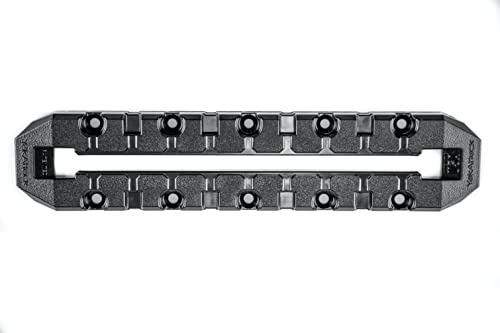
YakAttack GridLoc MightyMount XL, 9 inch
$15.95A short track section for a single accessory, which is the cheap way to add one mounting point without committing to a full length rail.
Best for: Adding one rod holder or camera mount
Check price on Amazon
Lowrance kayak scupper mount for Skimmer transducers
$53.74Drops a transducer through an existing scupper hole, so a sit on top kayak gets sonar with nothing drilled and nothing glued.
Best for: A sit on top kayak with a scupper in a sensible place
Check price on AmazonIntermediate tier: real rigging for a committed angler
Bigger purchases, and the kind of gift a kayak angler notices on every single trip rather than only occasionally.

Onyx MoveVent Dynamic paddle vest, USCG approved
$80.28Mesh in the lower back fits a high kayak seat instead of riding up on it, and big arm openings do not fight a cast the way a powerboat vest does.
Best for: A kayak angler still wearing a vest built for a powerboat
Check price on Amazon
YakAttack BlackPak Pro 13 x 13 fishing crate with 3 rod holders
$129.95A hard sided crate with three rod holders built into the structure rather than clipped on, which is the crate the rest of the category copies.
Best for: Anyone still using a milk crate with holes drilled in it
Check price on Amazon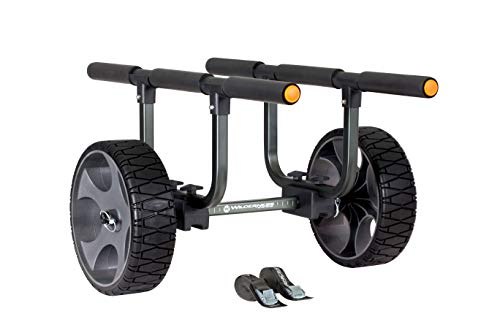
Wilderness Systems heavy duty kayak cart with flat-free wheels
$189.99Rated to four hundred fifty pounds with flat-free wheels, which is what a loaded pedal kayak actually weighs and what a cheap cart fails under.
Best for: Moving a heavy pedal kayak alone, without a second person to help carry it
Check price on AmazonExpert tier: powering a kayak properly
A kayak specific bow motor and a battery sized to actually fit the compartment it has to live in, which is the pairing that makes this upgrade work rather than fight the hull.

Minn Kota Kayak Terrova 55 with GPS, 36 inch shaft
$1,261.26 Published specsA genuine Spot-Lock bow motor built for a kayak bow and a thirty six inch shaft, which is a real product rather than a boat motor with the shaft cut short.
Best for: A pedal or paddle kayak being converted into a power fishing platform
Check price on Amazon
LiTime 12V 100Ah Xtra Mini LiFePO4 battery
$338.39 Published specsA physically smaller one hundred amp hour pack, which is the whole argument for lithium on a kayak where the battery box, not the budget, is the constraint.
Best for: Powering the motor above without stealing all the storage in the hatch
Check price on AmazonWho should not buy this tier: Anyone paddling a small, light kayak who wants to keep it simple and paddle-powered. A bow motor and its battery add real weight, and a battery box big enough for a full size marine battery is not something every kayak deck has room for.
What a kayak weight rating actually means
Which gift fits which kayak angler
The table below sorts a representative pick from each tier by what it costs and by the single reason it is the wrong gift for someone else.
A budget anchor trolley runs $13.95 and suits almost any kayak, while a kayak bow motor near $1,261.26 only makes sense for a hull with room to carry the extra weight.
Rule of thumb Boating and fishing convention rather than a published standard. Taught everywhere, useful, and not a specification. Nothing enforces it and no body publishes it.
| Gift | Price | Wrong for |
|---|---|---|
| H2o Kayaks canoe and kayak anchor trolley kit | $13.95 | Nobody, it fits almost any kayak deck |
| YakAttack BlackPak Pro 13 x 13 fishing crate with 3 rod holders | $129.95 | A minimalist angler with no tankwell to hold it |
| Wilderness Systems heavy duty kayak cart with flat-free wheels | $189.99 | Anyone who launches from a dock rather than a ramp or a beach |
| Minn Kota Kayak Terrova 55 with GPS, 36 inch shaft | $1,261.26 | A light kayak with no interest in carrying motor weight |
Gifts that miss on a kayak
Skip anything sized for a boat rather than a kayak, since a full size Group 31 marine battery will not fit most kayak hatches even when the amp hour rating looks tempting. Skip an automatic inflating life jacket, since automatic inflation is not appropriate for kayaking where ending up in the water on purpose, briefly, is a normal part of the sport. And skip a transducer arm or a display mount without confirming the deck already has track or a scupper in the right place, because a mount with nothing to attach to is dead weight in a hatch.
How we chose
We did not test this equipment in person and we never claim to. Picks are researched from manufacturer specification sheets, published engineering and regulatory figures, and the recurring themes in verified owner reviews. Every pick is matched to a real thrust rating, a real published amp draw, a real capacity or a real conductor size rather than to a price bracket, and it is placed in the tier where its published capability actually belongs. We rejected the unbranded flood that dominates several of these search results, because a lithium pack whose management board is the only thing between a cell fault and a fire, a breaker protecting a battery cable, a life jacket and a bracket holding a two thousand dollar motor to the bow at highway speed are all parts whose failure has a consequence nobody can walk away from. Where a figure is convention rather than a published standard we label it that way, and where a manufacturer does not publish a figure we leave it out instead of estimating it.
Frequently asked questions
What is the single best gift for a kayak angler?
An anchor trolley is the most commonly delayed upgrade in the sport. It moves the anchor point from bow to stern so the kayak sits at the angle the current or wind actually calls for, rather than swinging broadside. It costs very little relative to how much it changes a day on moving water, and almost nobody buys one until after their first frustrating trip without it.
Is a motor a good gift for someone who paddles or pedals?
Only for someone who has already said they want one, since it changes how the kayak handles and adds real weight that not every hull or every angler wants. A kayak specific motor with a short shaft and a right sized lithium battery is the correct pairing if a motor is genuinely wanted, rather than a cut down boat motor and an oversized marine battery.
Do kayaks have an official weight capacity like a boat does?
No. Federal capacity plate rules apply to powered monohull boats under twenty feet, and kayaks and canoes are excluded from that rule entirely. Whatever number a kayak manufacturer prints is their own figure, tested their own way, with no regulation behind it. Leaving real margin below that number matters more with a kayak than with a plated boat.
What life jacket should I buy for a kayak angler?
Look for a vest with mesh across the lower back so it clears a high kayak seat instead of riding up on it, and large armholes so it does not restrict a cast. Avoid an automatic inflating vest for kayaking specifically, since automatic inflation triggers on any immersion and kayakers routinely end up briefly in the water on purpose.
Is a fish finder a good gift for a kayak angler?
A castable or portable sonar unit that pairs to a phone is safer than a permanent unit, because it needs no drilling, no dedicated battery and no confirmed mounting point. A permanent fish finder is still a fine gift if the kayak already has a scupper mount or track in a known location and the transducer type is confirmed first.
How much weight does a bow motor and battery actually add?
A kayak specific motor plus a right sized lithium battery typically adds somewhere in the range of twenty five to forty pounds combined, depending on the exact motor and pack, which is meaningfully less than the same combination in lead acid. That weight still comes off the manufacturer stated capacity, so confirm the hull has margin before treating a motor as a safe gift.
Get the complete rigging shopping list
Every item in the beginner, intermediate and expert rigs for both a boat and a kayak, with running totals, in one printable list. No charge.
One list, no sequence of daily emails, and you can leave at any time.
Researched, not professional advice. This page is compiled from published engineering and regulatory figures, manufacturer specifications and owner-review consensus, not hands-on testing. Figures described as a rule of thumb are boating convention rather than published standards, and they are labelled that way wherever they appear. Marine electrical work is not house wiring. Use tinned, finely stranded marine cable, size it for voltage drop and for the ABYC E-11 ampacity table rather than one or the other, and put overcurrent protection within seven inches of the battery positive terminal, because everything between the post and the fuse is unprotected. A lithium battery needs a charger with a lithium profile. Never load a boat past its capacity plate, and remember that canoes and kayaks carry no federal capacity plate at all, so their stated capacity is the manufacturer own figure. Wear the life jacket, and treat early season water as the hazard it is: cold water immersion takes your breath and then your hands long before it takes your core.